
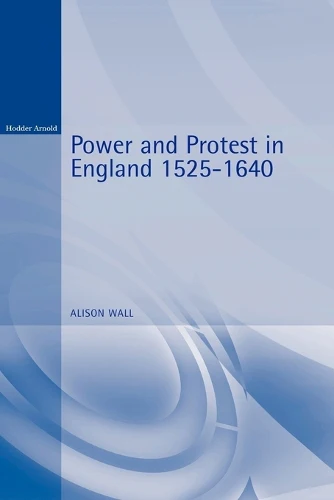
Power and Protest in England 1525-1640 (Reconstructions in Early Modern History
Power and the People describes how England remained governable between 1525 and 1640, despite the wars, famine, epidemics, and dynastic and religious crises of the period. The book surveys the mechanisms of authority at various levels, from the street and alehouse to the manor and the royal court.
Drawing on new research from local archives as well as reinterpretations of published literature, Power and the People describes how England remained governable between 1525 and 1640, despite the wars, famine, epidemics, and dynastic and religious crises of the period. The book surveys the mechanisms of authority at various levels, from the street and alehouse to the manor and the royal court. Maintaining order was a difficult challenge, given that England had no standing army or professional police, and Alison Wall investigates everything from the roles of village constables to the social cohesiveness that came from civic celebrations and participatory politics. Her book provides students with a rich perspective on the social world and political culture of early modern England.
Original: $71.20
-70%$71.20
$21.36Product Information
Product Information
Shipping & Returns
Shipping & Returns
Description
Power and the People describes how England remained governable between 1525 and 1640, despite the wars, famine, epidemics, and dynastic and religious crises of the period. The book surveys the mechanisms of authority at various levels, from the street and alehouse to the manor and the royal court.
Drawing on new research from local archives as well as reinterpretations of published literature, Power and the People describes how England remained governable between 1525 and 1640, despite the wars, famine, epidemics, and dynastic and religious crises of the period. The book surveys the mechanisms of authority at various levels, from the street and alehouse to the manor and the royal court. Maintaining order was a difficult challenge, given that England had no standing army or professional police, and Alison Wall investigates everything from the roles of village constables to the social cohesiveness that came from civic celebrations and participatory politics. Her book provides students with a rich perspective on the social world and political culture of early modern England.