
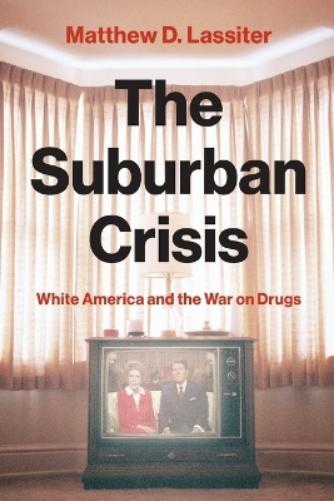
The Suburban Crisis
White America and the War on Drugs How the drug war transformed American political culture
Since the 1950s, the American war on drugs has positioned white middle-class youth as sympathetic victims of illegal drug markets who need rehabilitation instead of incarceration whenever they break the law. The Suburban Crisis traces how politicians, the media, and grassroots political activists crusaded to protect white families from perceived threats while criminalizing and incarcerating urban minorities, and how a troubling legacy of racial injustice continues to inform the war on drugs today.
In this incisive political history, Matthew Lassiter shows how the category of the “white middle-class victim” has been as central to the politics and culture of the drug war as racial stereotypes like the “foreign trafficker,” “urban pusher,” and “predatory ghetto addict.” He describes how the futile mission to safeguard and control white suburban youth shaped the enactment of the nation’s first mandatory-minimum drug laws in the 1950s, and how soaring marijuana arrests of white Americans led to demands to refocus on “real criminals” in inner cities. The 1980s brought “just say no” moralizing in the white suburbs and militarized crackdowns in urban centers.
The Suburban Crisis reveals how the escalating drug war merged punitive law enforcement and coercive public health into a discriminatory system for the social control of teenagers and young adults, and how liberal and conservative lawmakers alike pursued an agenda of racialized criminalization.
Original: $63.14
-70%$63.14
$18.94Product Information
Product Information
Shipping & Returns
Shipping & Returns
Description
White America and the War on Drugs How the drug war transformed American political culture
Since the 1950s, the American war on drugs has positioned white middle-class youth as sympathetic victims of illegal drug markets who need rehabilitation instead of incarceration whenever they break the law. The Suburban Crisis traces how politicians, the media, and grassroots political activists crusaded to protect white families from perceived threats while criminalizing and incarcerating urban minorities, and how a troubling legacy of racial injustice continues to inform the war on drugs today.
In this incisive political history, Matthew Lassiter shows how the category of the “white middle-class victim” has been as central to the politics and culture of the drug war as racial stereotypes like the “foreign trafficker,” “urban pusher,” and “predatory ghetto addict.” He describes how the futile mission to safeguard and control white suburban youth shaped the enactment of the nation’s first mandatory-minimum drug laws in the 1950s, and how soaring marijuana arrests of white Americans led to demands to refocus on “real criminals” in inner cities. The 1980s brought “just say no” moralizing in the white suburbs and militarized crackdowns in urban centers.
The Suburban Crisis reveals how the escalating drug war merged punitive law enforcement and coercive public health into a discriminatory system for the social control of teenagers and young adults, and how liberal and conservative lawmakers alike pursued an agenda of racialized criminalization.