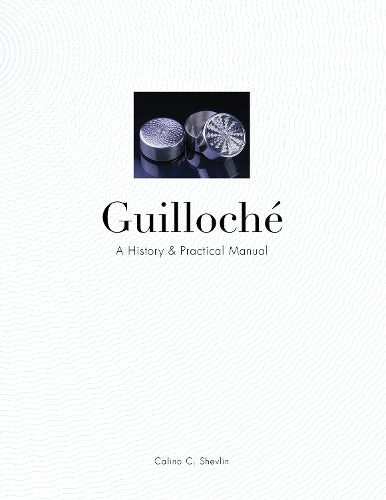
Guilloché
A History & Practical Manual
This passionately researched book tracks the birth, decline, and revival of guilloche and features exclusive information from the world's few living professional guillocheurs
Guilloché is the decorative engraving of a metal surface, such as watch cases, cufflinks, or Fabergé Eggs, with the use of a hand-powered device called a rose engine. This passionately researched book tracks the birth, decline, and revival of this endangered craft and features exclusive information from the world's few living professional guillocheurs, as well as an exploration of the distinction between guilloché and its forebearer, ornamental turning. The word “guilloché” was first used to describe details of ancient Greek columns, but the rose engine didn't appear until the mid-1700s, near the French-Swiss border. With a basic knowledge of this contraption, and the straight-line machine, aspiring guillocheurs can follow 21 pattern-cutting “recipes” to create several classic designs and discover endless possibilities for new concepts. Authoritative text, gallery and detail photographs, dynamic illustrations, and precise, hand-drawn renderings will assist and delight adventurous craftspeople, machinists and engineers, and steampunks alike.
Original: $67.17
-70%$67.17
$20.15Product Information
Product Information
Shipping & Returns
Shipping & Returns
Description
A History & Practical Manual
This passionately researched book tracks the birth, decline, and revival of guilloche and features exclusive information from the world's few living professional guillocheurs
Guilloché is the decorative engraving of a metal surface, such as watch cases, cufflinks, or Fabergé Eggs, with the use of a hand-powered device called a rose engine. This passionately researched book tracks the birth, decline, and revival of this endangered craft and features exclusive information from the world's few living professional guillocheurs, as well as an exploration of the distinction between guilloché and its forebearer, ornamental turning. The word “guilloché” was first used to describe details of ancient Greek columns, but the rose engine didn't appear until the mid-1700s, near the French-Swiss border. With a basic knowledge of this contraption, and the straight-line machine, aspiring guillocheurs can follow 21 pattern-cutting “recipes” to create several classic designs and discover endless possibilities for new concepts. Authoritative text, gallery and detail photographs, dynamic illustrations, and precise, hand-drawn renderings will assist and delight adventurous craftspeople, machinists and engineers, and steampunks alike.