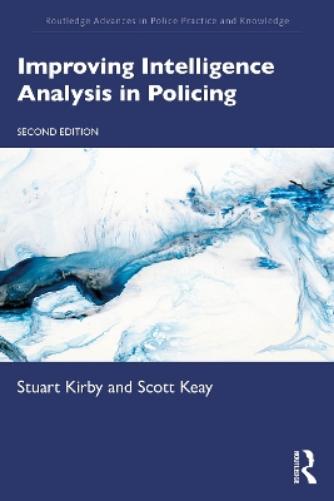
Improving Intelligence Analysis in Policing
This book offers an accessible and critical account of how intelligence analysis can improve policing. The second edition has been updated with new research and material offering inventive modes of critical thinking, including both practical knowledge and an evaluative understanding of the applications and risks associated with intelligence. The use of criminal intelligence remains a significant area of growth, especially across the wider “policing” arena. This book offers an accessible and critical account of how intelligence analysis can improve policing and law enforcement. This second edition has been updated with new research and material offering inventive modes of critical thinking, including both practical knowledge and an evaluative understanding of the applications and risks associated with intelligence. Some of the key features of the book include: This volume is aimed at students and scholars of law enforcement intelligence studies, policing, and criminology. It will also be a useful resource for policymakers as well as practitioners in a range of law enforcement settings.
Original: $90.01
-70%$90.01
$27.00Product Information
Product Information
Shipping & Returns
Shipping & Returns
Description
This book offers an accessible and critical account of how intelligence analysis can improve policing. The second edition has been updated with new research and material offering inventive modes of critical thinking, including both practical knowledge and an evaluative understanding of the applications and risks associated with intelligence. The use of criminal intelligence remains a significant area of growth, especially across the wider “policing” arena. This book offers an accessible and critical account of how intelligence analysis can improve policing and law enforcement. This second edition has been updated with new research and material offering inventive modes of critical thinking, including both practical knowledge and an evaluative understanding of the applications and risks associated with intelligence. Some of the key features of the book include: This volume is aimed at students and scholars of law enforcement intelligence studies, policing, and criminology. It will also be a useful resource for policymakers as well as practitioners in a range of law enforcement settings.