
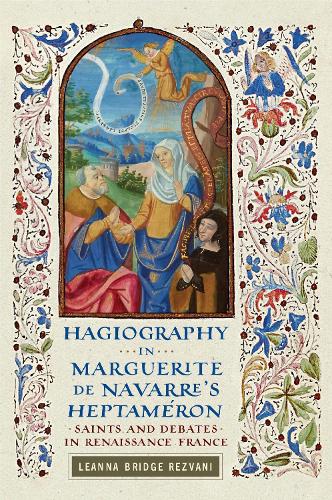
Hagiography in Marguerite De Navarre's Heptaméron
Saints and Debates in Renaissance France
Marguerite de Navarre was one of the most educated and powerful women of Renaissance Europe. The Heptaméron, her celebrated collection of tales and debates, offers readers invaluable insights into diverse aspects of sixteenth-century French society. Scholars of Marguerite have written extensively on the complexities of her religious thought, but the influence of Catholic narrative tradition on the Heptaméron has been underexplored. Through an analysis of Marguerite’s tales together with literary works, religious writings, and visual images of the saints, Hagiography in Marguerite de Navarre’s Heptaméron reveals the important relationship between the Queen of Navarre’s text, hagiographic tradition, and various sixteenth-century controversies. By contextualizing the Heptaméron within these theological and literary debates, this volume illustrates how Marguerite both borrowed from and revised hagiography to lend greater authority to her writing, advocate on behalf of women, and craft an innovative response to polemics about gender, religion, and the cult of saints.
Original: $40.22
-70%$40.22
$12.07Product Information
Product Information
Shipping & Returns
Shipping & Returns
Description
Saints and Debates in Renaissance France
Marguerite de Navarre was one of the most educated and powerful women of Renaissance Europe. The Heptaméron, her celebrated collection of tales and debates, offers readers invaluable insights into diverse aspects of sixteenth-century French society. Scholars of Marguerite have written extensively on the complexities of her religious thought, but the influence of Catholic narrative tradition on the Heptaméron has been underexplored. Through an analysis of Marguerite’s tales together with literary works, religious writings, and visual images of the saints, Hagiography in Marguerite de Navarre’s Heptaméron reveals the important relationship between the Queen of Navarre’s text, hagiographic tradition, and various sixteenth-century controversies. By contextualizing the Heptaméron within these theological and literary debates, this volume illustrates how Marguerite both borrowed from and revised hagiography to lend greater authority to her writing, advocate on behalf of women, and craft an innovative response to polemics about gender, religion, and the cult of saints.